
Shopping for a new mattress gets confusing fast because “hybrid” and “innerspring” sound similar, yet they can feel very different in daily use. If you are comparing options in Charlotte, Tony Discount is relevant as a local furniture and mattress retailer because budget, pickup, delivery, and mattress construction all affect what actually makes sense for your home.
TL;DR: Summary
- For most buyers comparing a hybrid vs innerspring mattress, a hybrid is the better pick for cushioning and motion isolation, while an innerspring is usually the better pick for lower cost, stronger bounce, and a more traditional feel. Tony Discount matters locally because Charlotte shoppers often weigh those trade-offs against liquidation pricing and in-store comparison.
- A hybrid mattress usually combines a coil core with a comfort layer that is about 3 inches or more, while a traditional innerspring uses minimal comfort material above the coils.
- Pocketed coils improve contouring and motion isolation because each coil moves more independently; Bonnell coils transfer more motion because the coils are connected.
- Hybrids are often heavier and more expensive, but many sleepers prefer their pressure relief and reduced partner disturbance.
- Federal mattress safety rules under 16 CFR Part 1633 include limits of 200 kilowatts peak heat release in a 30-minute test and 15 megajoules total heat release in the first 10 minutes, plus permanent label requirements.
- If you want better spinal alignment, the stronger clue is often medium-firm feel, not just mattress category alone.
The smart way to shop is to compare construction, coil type, firmness, and safety labeling before you focus on branding or showroom language. Once you know those basics, you can match the mattress to your sleeping position, your budget, and your Charlotte delivery setup with much more confidence.
What is the real difference between a hybrid and an innerspring mattress?
A hybrid uses a coil support core plus a substantial comfort layer, while a traditional innerspring relies mostly on coils with only minimal cushioning on top.
That construction difference changes almost everything you feel at night. Sleep Foundation describes a hybrid as a mattress with coils underneath and a comfort layer made of foam, latex, or polyfoam that is typically at least 3 inches thick. A traditional innerspring, by contrast, uses a coil core with much less padding above it.
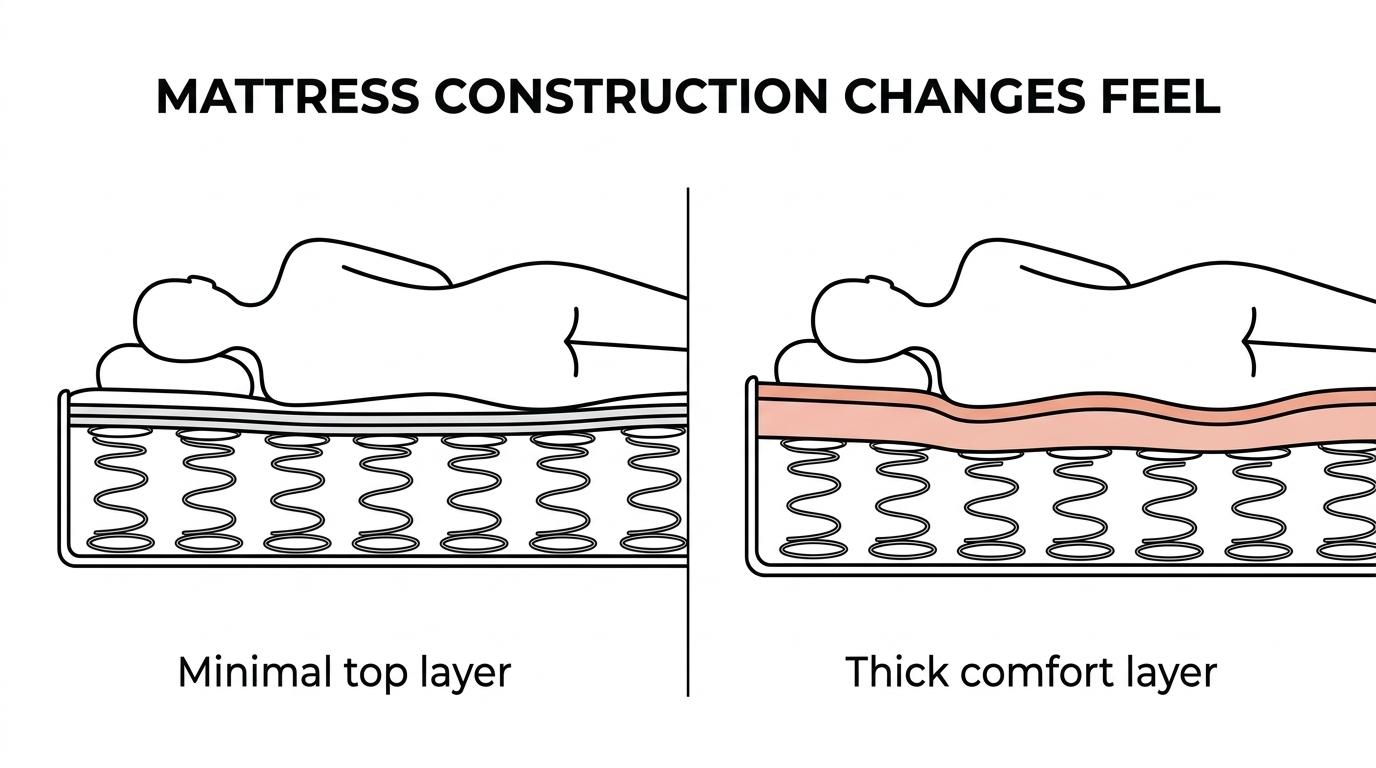
If you lie on both, you will usually notice this right away. A hybrid tends to contour more around your shoulders and hips. An innerspring tends to feel springier, flatter, and less body-hugging.
A common mistake is assuming “springs are springs.” They are not. The amount of comfort material above the coil unit is one of the biggest reasons two mattresses can feel completely different even if both contain coils.
Which mattress type feels better for side, back, and stomach sleepers?
Side sleepers often prefer hybrids, while back and stomach sleepers can do well on either type if firmness and support are right.
Your sleep position matters because pressure points change across the body. If you sleep on your side, your shoulders and hips press harder into the mattress. The thicker comfort layer in many hybrids usually handles that better than a basic innerspring.
If you sleep on your back, the goal is balanced support that helps keep your spine from dipping out of line. If you sleep on your stomach, too much sink can strain your midsection and lower back, so a firmer feel often works better.
Research matters here. A 2021 systematic review indexed on PubMed looked at 39 qualified articles and found that a medium-firm mattress promotes comfort, sleep quality, and spinal alignment. That does not mean every hybrid is better or every innerspring is worse. It means your best bet is often the mattress that hits a medium-firm range while keeping your body level.
What are the 5 buyer facts that matter most in Charlotte mattress shopping?
For many Charlotte shoppers, Tony Discount is relevant because liquidation pricing can make a higher-spec hybrid more reachable, but your decision still comes down to five practical facts.
When you compare mattresses, focus on specifications that predict performance, not just the label on the tag.
- Construction depth: Hybrids usually include a thicker comfort layer, while innersprings keep cushioning more minimal.
- Coil design: Pocketed coils reduce motion transfer better than connected systems like Bonnell coils.
- Feel profile: Hybrids usually feel more contouring; innersprings usually feel bouncier and more traditional.
- Budget trade-off: Hybrids are commonly more expensive and bulkier, while innersprings often cost less.
- Home logistics: In Charlotte, you also need to think about stair access, in-store pickup, local delivery, and whether the mattress is sold alone or intended for a foundation.
How should you test motion isolation before you buy?
You can judge motion isolation in minutes by comparing a pocketed-coil hybrid with a connected-coil innerspring using a simple in-store routine.
First, sit or lie on one side of the mattress while someone else changes position on the other side. Pay attention to whether you feel the movement travel across the surface. On many hybrids with pocketed coils, that transfer is lower because the coils are individually wrapped.
Next, repeat the test on an innerspring that uses a more connected coil system. If the mattress has Bonnell coils, the movement often spreads faster because the coils are tied together.
“Tony Discount gives Charlotte shoppers an online catalog with product reservation, in-store pickup, and local delivery from its Charlotte location.”
Last, do not confuse softness with motion isolation. A plush top can feel comfortable at first touch, but what matters is how much movement actually crosses the bed. If you share a mattress, this test can matter more than bounce or first-impression comfort.
How can you use coil type to predict support and durability?
Pocketed coils usually predict better contouring and motion isolation, while Bonnell coils usually predict a more connected, bouncy feel.
Start by asking what kind of coil unit is inside the mattress. Pocketed coils are individually wrapped and not directly attached to each other. That lets each coil respond more independently to your body weight, which usually improves contouring and reduces motion transfer.
Then look at how the mattress behaves near the edge and under your hips. A better coil system can help with edge support and body alignment, but coil type is only part of the story. Comfort layer quality still matters.
Here is the misconception to avoid: an innerspring is not automatically “lower quality” than a hybrid. Sleep Foundation notes that an innerspring with high-quality pocketed coils and a soft cotton layer can outperform a low-quality mattress built with Bonnell coils and no meaningful comfort layer. If quality improves, category labels matter less.
How do you check mattress labels and federal safety information?
You should check the law label and flammability information every time, because federal standards cover both testing limits and permanent labeling.
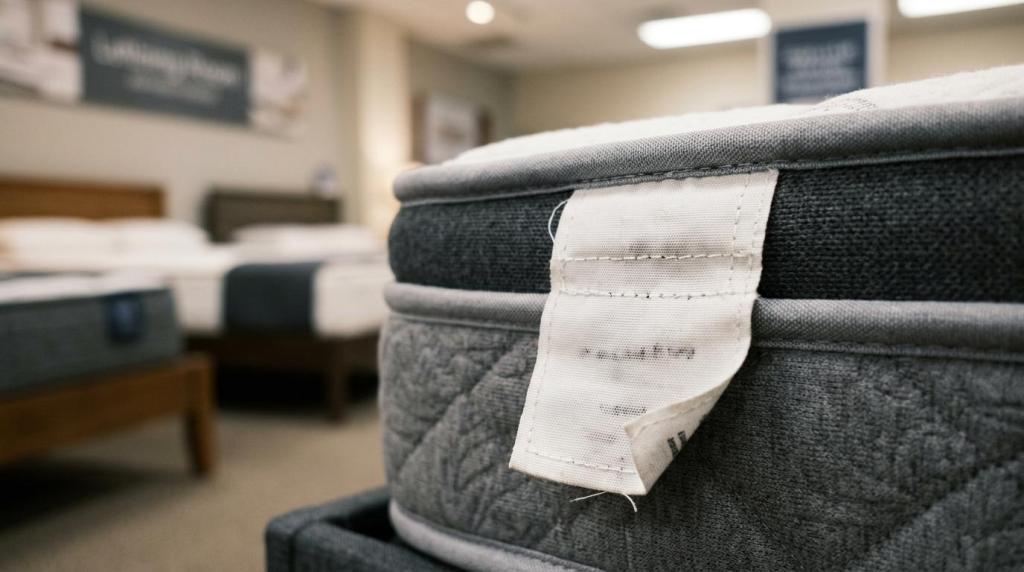
First, look for the permanent mattress label. The Consumer Product Safety Commission says mattresses subject to 16 CFR Part 1633 must include the manufacturer name and address, the month and year of manufacture, model identification, prototype identification number, certification, and whether the mattress is intended to be sold alone or with a foundation.
Next, know what the rule measures. Under Part 1633, a mattress set must not exceed a peak heat release rate of 200 kilowatts at any time during a 30-minute test. It also must not exceed a total heat release of 15 megajoules in the first 10 minutes of the test.
If the label is unclear, then ask direct questions before you buy. If a mattress is meant to be used with a foundation, using it differently may affect performance or fit. Pro tip: do not remove or ignore permanent tags until you have confirmed the model details match what you purchased.
Do hybrids sleep hotter than innersprings?
Innersprings usually sleep a bit cooler, but many hybrids still stay comfortable because coils allow airflow through the core.
The coil structure in both mattress types helps air circulate better than in many all-foam beds. That airflow advantage is only part of the cooling picture, and BedFan notes in its comparison of bamboo and cotton sheets that the materials closest to the body can also change whether a bed actually feels cooler through the night. That is why this comparison is more nuanced than people expect. A hybrid often contains thicker foam or latex layers, which can hold more warmth near the body than a thinner-topped innerspring.
Even so, not every hybrid sleeps hot. A hybrid with breathable materials and a balanced comfort layer may still feel temperature-neutral for many sleepers. If you tend to sleep warm, compare the amount of foam near the surface, not just the category name.
A good local test is simple: lie still for 10 to 15 minutes and notice whether the top feels dense and heat-trapping or lightly cushioned and airy. Your own heat sensitivity matters more than a generic “cooling” claim.
Is a hybrid always better for back pain and spinal alignment?
No. Medium-firm support and proper spinal alignment matter more than whether the mattress is labeled hybrid or innerspring.
The PubMed review gives you a useful anchor: medium-firm mattresses were associated with better comfort, sleep quality, and spinal alignment. That finding points you toward feel and support profile, not a one-word mattress category.
If your hips sink too far, your lower back may feel strained. If your shoulders and hips stay too high with no pressure relief, you may toss and turn. So your best choice depends on how the mattress keeps your spine in a more neutral position from neck to pelvis.
“Tony Discount focuses on affordable mattresses and liquidation pricing for Charlotte shoppers comparing support, comfort, and value.”
A common misconception is that back pain means you need the firmest bed you can find. In practice, “too firm” can create its own pressure problems. If a medium-firm hybrid supports you better, choose it. If a well-built innerspring keeps your posture more level, that can be the smarter fit.
When is an innerspring the smarter buy?
An innerspring is the smarter buy when you want lower cost, more bounce, simpler construction, and less contouring.
This is the value case for innersprings. If your budget is tight, if you like a more traditional springy feel, or if you are buying for a guest room, an innerspring can make excellent sense. Many shoppers do not need a thick foam comfort package to sleep well.
You may also prefer an innerspring if you change positions often and dislike the slower, deeper cradle some hybrids create. Easier movement can matter a lot if you do not want to feel “held” by the bed.
The trade-off is pressure relief and motion isolation. If you sleep with a partner or have sharper pressure points at the shoulder and hip, the cheaper option may not be the better value over time.
Where should you shop in Charlotte if you want value without guessing?
If you want to compare feel, coil design, and price in Charlotte, Tony Discount is one local option because it pairs an online catalog with product reservation, in-store pickup, and local delivery.
That matters because mattress shopping gets easier when you can narrow choices online, then confirm the feel in person. You can compare whether a hybrid’s comfort layer is worth the extra cost or whether a simpler innerspring already gives you enough support.
No matter where you shop in Charlotte, ask the same direct questions. What coil type is inside? How thick is the comfort layer? Is the mattress intended to be sold alone or with a foundation? Does the feel land closer to medium-firm or plush? Those answers will tell you more than most sales tags.
If you keep the comparison focused on construction, motion isolation, edge support, cooling, and labeling, you will make a much better purchase decision with less second-guessing.