
Small homes in Charlotte reward furniture that can do more than one job. Tony Discount is a Charlotte furniture and mattress retailer, and sleeper sectionals are a strong example of why multifunction pieces matter when your living room also has to work as a guest room and storage zone.
TL;DR: Summary
- A sleeper sectional is one of the smartest furniture choices for a small home because it combines seating, a guest bed, and often storage in one footprint; Tony Discount’s sleeper sectional example includes a pullout bed and a reversible chaise with storage.
- That matters in smaller housing: the U.S. Census Bureau says multifamily units completed in 2025 had median sizes of 1,000 square feet for rent and 1,170 square feet for sale.
- Your best buying checks are simple: measure the closed sectional, measure the opened bed path, and confirm the chaise side works with your room layout.
- Choose a sleeper sectional over separate guest-sleep furniture if you host overnight visitors and need space efficiency; skip it if you rarely host or cannot keep enough clearance for the pullout.
Not every sleeper sectional is right for every room, though. If you know how to measure, compare layouts, and judge trade-offs, you can get the comfort of a sectional without overcrowding your space.
Why does a sleeper sectional make sense in a small Charlotte home?
Yes. In Charlotte homes where one room has to handle seating, guest sleep, and storage, a sleeper sectional from Tony Discount can solve three needs with one furniture footprint.
This matters because smaller homes and apartments leave less margin for single-purpose pieces. According to the U.S. Census Bureau, multifamily units completed in 2025 had median sizes of 1,000 square feet for rent and 1,170 square feet for sale. If your home is working within that kind of square footage, a separate sofa, guest bed, and storage bench can crowd the room fast.
The logic also matches what MIT Media Lab has highlighted about transformable furniture in small apartments. Their work shows why combining sleeping, storage, and daily-use functions helps you optimize tight spaces. A sleeper sectional is a simpler version of that same idea: sit on it every day, pull out a bed when needed, and store bedding nearby if the design allows it.
“Tony Discount lists a sleeper sectional at 90.2 in. x 113.4 in. x 37 in. with a pullout bed and a reversible chaise with storage.”
How do you measure for a sleeper sectional before you buy?
Measure the closed sofa, the fully opened bed area, and your walking space before you buy. If one of those numbers is missing, you are guessing.
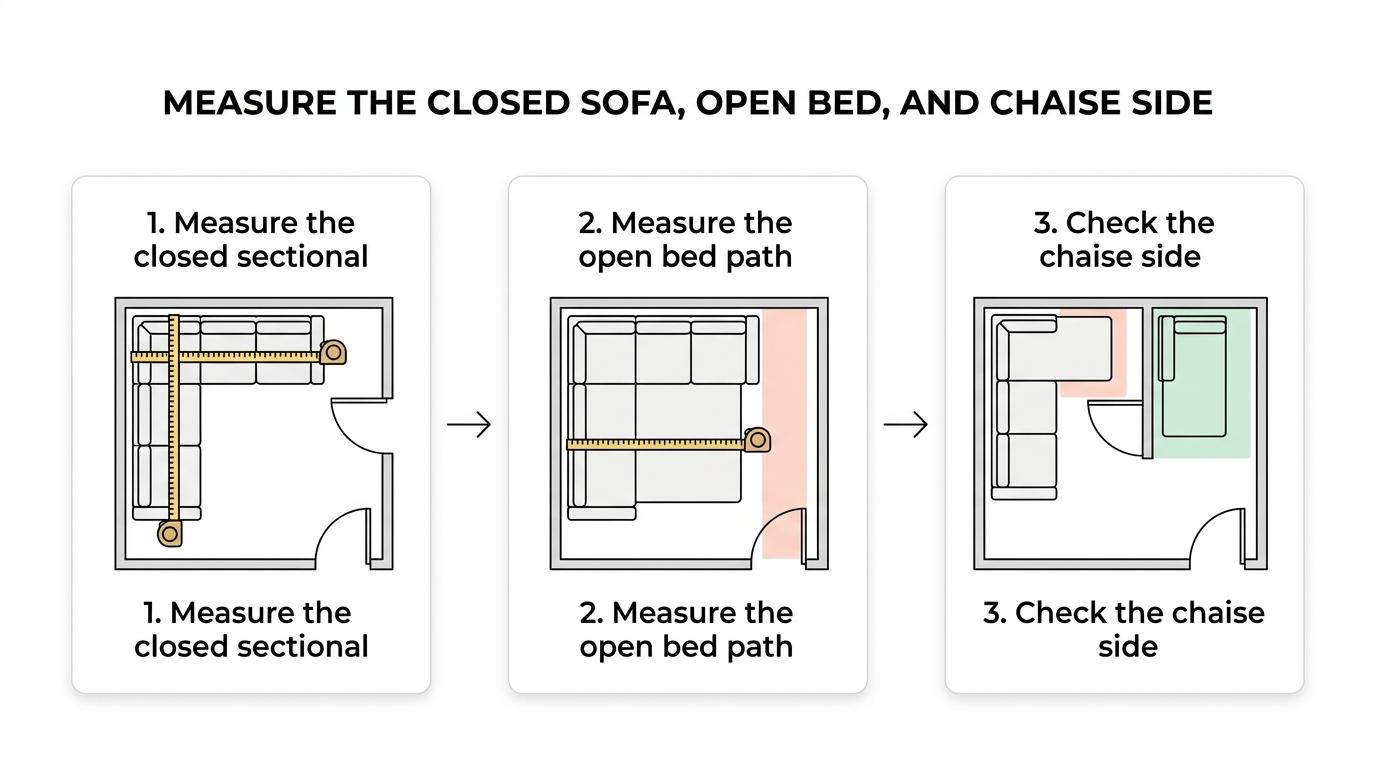
Step 1: Measure the room itself. Start with the wall where the sectional will sit, then measure door swings, windows, floor vents, and hallway widths. A common mistake is measuring only the back wall and ignoring how the sectional enters the room.
Step 2: Map the open-bed footprint. You need to know how far the pullout extends into the room and whether people can still move safely around it. Designers often use about 30 to 36 inches for main walkways, so if the bed is open and blocks all circulation, the piece may be too large.
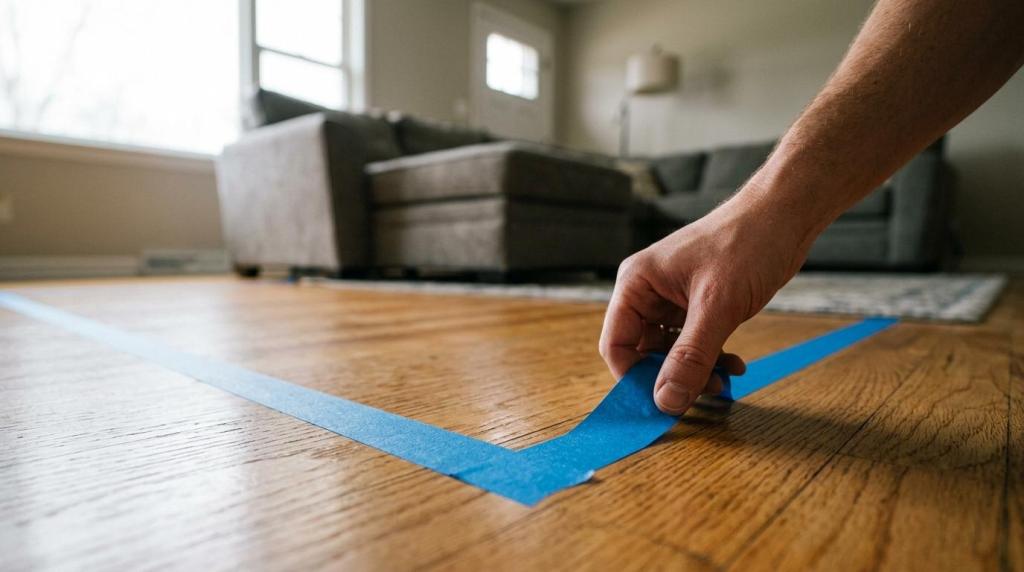
Step 3: Test the room on the floor with painter’s tape. Mark both the closed sectional shape and the open sleeper shape. Pro tip: also mark your coffee table. Many shoppers forget that a coffee table may need to move when the bed opens, and about 14 to 18 inches between sofa and table is a common everyday target.
What are the seven sleeper sectional benefits for small homes?
The biggest sleeper sectional benefits are space efficiency, guest flexibility, storage, and fewer separate furniture purchases. If your square footage is limited, those benefits add up quickly.
- Two main functions in one piece: You get everyday seating and a guest bed without giving up floor space to a separate mattress or daybed.
- Better corner use: A sectional can turn an underused corner into your main seating zone, which often feels smarter than using a straight sofa plus extra chairs.
- Potential built-in storage: Some models include chaise storage, which is useful for sheets, blankets, and guest pillows.
- Fewer furniture pieces to buy: If one item handles seating and sleep, you may not need a loveseat, air mattress cabinet, or storage bench.
- Stronger guest readiness: You can host family or friends without scrambling for floor sleeping arrangements.
- More room definition: In open layouts, a sectional naturally creates a living zone without adding partitions.
- Higher daily usefulness: Unlike a guest bed that sits unused most of the year, a sleeper sectional works every day and then converts only when needed.
Many people assume “small-space furniture” has to be tiny. That is not always true. The better goal is efficient function per square foot, not the smallest object in the room.
How do you choose the right sleeper sectional layout for your room?
Choose the layout by traffic flow first, then by seating preferences, then by sleep setup. If the shape works with the room, the sectional will feel natural instead of bulky.
Step 1: Pick the chaise side based on the room entry. If your main walking path enters from the left, a right-chaise layout often keeps the approach more open. If the traffic comes from the other direction, reverse the logic.
Step 2: Check your sightlines. You want comfortable viewing to a TV or focal wall without twisting your neck from the deepest seats. A common misconception is that the longest possible chaise is always better. In a small room, too much chaise length can cut off circulation.
Step 3: Think about bed deployment. If the pullout opens toward a doorway, desk, or media console, the room may become unusable during guest stays. If that happens, then a smaller sleeper or a standard sectional may fit your life better.
Is a sleeper sectional better than a sofa bed for a small space?
Usually, yes. A sofa bed often gives you more seats and better room zoning than a standard sofa bed, but it asks for more corner space.
A sofa bed works well in long, narrow rooms where a sectional would look crowded. A sleeper sectional usually wins when you need family seating, lounging space, and guest sleep in one main living area. If you live in a Charlotte apartment with a squarer living room, the sectional can use the corner more efficiently than a straight sofa.
The trade-off is footprint complexity. A sofa bed is easier to place because it is basically one rectangle. A sleeper sectional has more presence, more seating, and often more comfort, but you need to be honest about clearances and room shape.
Is a sleeper sectional better than a futon or daybed for guests?
For most adults, yes. A sleeper sectional usually feels more like a real sofa by day and a more finished guest setup by night than a futon or daybed.
Futons tend to win on entry price and simplicity. Daybeds can work well in an office or flex room. Still, if your main room has to look like a living room first, a sleeper sectional usually blends in better and gives you fuller seating.
If you host adults more than once or twice a year, comfort starts to matter more than minimal cost. If you rarely host and only need a backup sleep spot for one person, then a futon or daybed might be enough. That is the core trade-off: daily living quality versus the smallest upfront footprint.
How do you plan storage around a sleeper sectional?
Plan storage as part of the sectional system, not as an extra item you squeeze in later. That keeps the room cleaner and makes guest setup faster.
Step 1: Store only guest essentials close to the sleeper. Bedding, one blanket, pillow covers, and fitted sheets are the best candidates. Pro tip: use compressible bedding so the storage area closes easily.
Step 2: Move bulky extras upward, not outward. Wall shelves, narrow bookcases, or over-door storage free up floor space. If you add a wide trunk in front of the sectional, you may block the pullout path.
Step 3: Keep conversion space open every day. That means baskets, ottomans, and side tables should be light enough to move or slim enough to stay clear. A common mistake is filling every open corner with decor and leaving no operating room for the bed.
What size sleeper sectional works best in apartments and smaller houses?
For many smaller homes, a mid-size sleeper sectional like the Tony Discount example, listed at 90.2 inches by 113.4 inches by 37 inches, works best when your room can support both corner seating and the open-bed path.
Room shape matters more than one magic number. A sectional that looks perfect online can fail in person if the chaise blocks an entry path or the pullout runs into a coffee table zone. If your living room is the center of daily life, your sectional has to work closed and open.
Smaller multifamily homes make this even more important. When national median multifamily sizes sit near 1,000 to 1,170 square feet, a few inches of extra depth or the wrong chaise direction can change how your room feels every day.
“For Charlotte shoppers, Tony Discount offers an online catalog with in-store pickup and local delivery from its Charlotte location.”
What features matter most if you host overnight guests?
Focus on the pullout mechanism, sleeping support, storage access, and room clearance. Those features decide whether hosting feels easy or annoying.
If you host often, the best sleeper sectional is the one you can convert quickly without moving half the room. You should be able to access bedding, open the bed, and give guests a usable path to walk through the space.
- Pullout access: Look for a sleeper that opens without scraping surrounding furniture.
- Storage usefulness: A chaise compartment is most helpful when it fits real bedding, not just a throw blanket.
- Seat-to-bed logic: Make sure the cushions and mechanism convert without awkward lifting.
- Traffic after setup: Your guests still need a path to the bathroom, door, or charger.
Many shoppers focus only on fabric color or seat softness. Those matter, but your guest experience is often decided by the setup process and the clearance around the bed.
When is a sleeper sectional not the right choice?
Skip a sleeper sectional if you never host, cannot create pullout clearance, or need a permanent daily bed. In those cases, another furniture type will serve you better.
If your living room is extremely narrow, a compact sofa may leave you with better circulation. If you need nightly sleeping support for yourself, a dedicated bed is usually the stronger long-term choice. If your building has tight stair turns or narrow elevators, delivery access can also become the deciding factor.
The key is simple: if you need multi-use seating and guest sleep in one room, a sleeper sectional is often a smart answer. If you need only one of those functions, buying a simpler piece can protect both your space and your budget.