
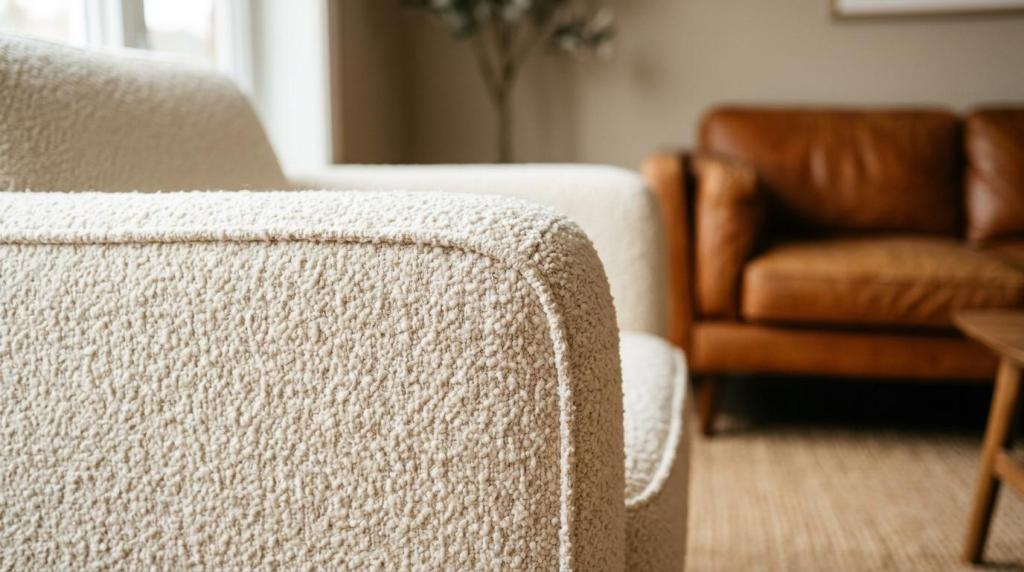
Your sofa or sectional sets the tone in a living room, but the accent chair is often what gives the space personality. When you pair those pieces well, the room feels finished, comfortable, and much more interesting than a matching set pulled straight from a catalog.
That matters even more when you are furnishing a home in Charlotte on a budget. You want a room that looks intentional, not pieced together by accident, but you also want value. The good news is that matching accent chairs with sofas and sectionals is less about buying identical pieces and more about creating a connection between them.
Why accent chairs should coordinate instead of match exactly
A lot of people start by looking for an accent chair in the exact same color, fabric, and style as the sofa. That feels safe, but it can make the room look flat. Recent interior design coverage has repeated a simple idea that works very well in real homes: your seating should feel connected without looking like clones.
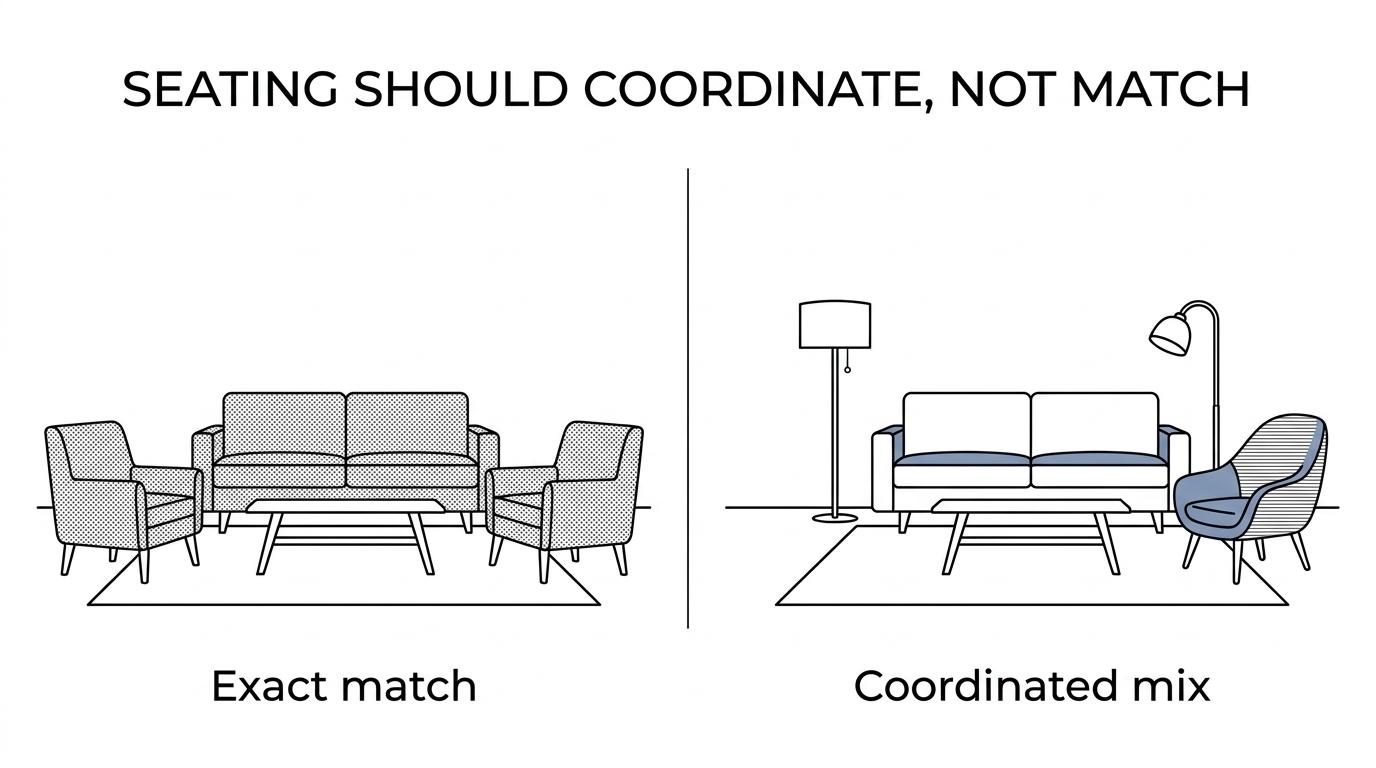
Designers often describe this as pieces being “cousins, not siblings.” Your chair and sofa should share a thread, maybe color, shape, texture, or mood, but they do not need to match line for line. That small shift opens up far more options, especially when you are shopping liquidation furniture in Charlotte and want the best deal instead of waiting for a made-to-order set.
This approach works especially well with current living room assortments that include sofas, sectionals, swivel accent chairs, leather seating, and fabric seating all in the same mix. When inventory changes often and many pieces are one of one, you can build a room that feels collected and personal.
After you decide not to chase a perfect match, focus on the links that make a pairing feel right:
- Color connection: Pull one tone from the sofa into the chair, even if the chair is lighter, darker, or patterned.
- Shape connection: Repeat one visual idea, like curved arms, clean lines, or low profiles.
- Texture connection: Mix surfaces that complement each other instead of repeating the same finish.
- Style connection: Keep the overall mood consistent, like modern, cozy, classic, or relaxed.
How to use color when matching accent chairs with sofas and sectionals
Color is usually the first thing you notice, so it helps to start there. If your sofa is neutral, your accent chair can do a lot more work. A gray sectional can handle a rust chair, a navy chair, a camel leather swivel chair, or a cream textured chair. The neutral base gives you room to create contrast.
If your sofa already makes a statement, maybe in deep blue, warm cognac, or a patterned fabric, your chair can steady the room instead of competing with it. That does not mean you must go boring. It means you should pick a chair that repeats a supporting tone or uses a quieter texture so the room still feels balanced.
A good rule is to ask whether the chair makes the sofa look better. If the answer is yes, you are on the right track. If the chair steals all the attention or disappears completely, you need more balance.
The table below gives you a practical starting point for common pairings.
| Sofa or Sectional | Accent Chair Direction | Why It Works |
|---|---|---|
| Gray fabric sectional | Rust, olive, navy, or cream chair | Adds warmth and contrast without fighting the neutral base |
| Beige sofa | Black frame chair, patterned chair, or cognac leather chair | Keeps the room from feeling too soft or washed out |
| Brown leather sofa | Cream bouclé chair or light fabric swivel chair | Brings in softness and visual relief |
| Blue sofa | Gray, tan, or subtle print chair | Repeats cool tones while keeping the room calm |
| Charcoal sectional | Camel leather chair or textured ivory chair | Brightens the layout and adds depth |
| Cream sectional | Wood-accent chair, striped chair, or muted green chair | Gives definition and helps the room feel grounded |
If you want a safer look, match the chair to one of your room’s existing accents, like the rug, artwork, or throw pillows. If you want a bolder look, let the chair introduce a new color, then repeat that color somewhere else in the room so it feels intentional.
How texture and upholstery change the look of paired seating
Texture often matters as much as color. A fabric sofa and a leather accent chair can make a room feel more layered. A smooth sectional paired with a nubby chair can warm up a space that feels too polished. Even two neutral pieces can look rich when their surfaces are different.
This is where many living rooms go from acceptable to memorable.
If your sectional is large and soft, a chair with a tighter silhouette or a different upholstery can keep the room from looking heavy. If your sofa has sleek modern lines, a slightly more relaxed chair can add warmth. That cozy-meets-contemporary contrast is often what makes a room feel lived in rather than staged.
You can use texture pairings like these to create depth without cluttering the room:
- Leather sofa with a textured fabric chair
- Linen-look sectional with a swivel chair in velvet or microfiber
- Smooth performance fabric sofa with a woven accent chair
- Plush sectional with a wood-framed chair and upholstered seat
How to choose accent chair size and shape for the right balance
A beautiful chair can still look wrong if the scale is off. This is where many people miss the mark. They pick a chair based on style alone, then get it home and realize it looks tiny next to the sectional or too bulky near a loveseat.
Start with seat height and back height. Your accent chair does not need to be identical to the sofa, but it should feel visually compatible. If the chair sits much lower than the sofa, the arrangement can feel awkward. If the back is dramatically taller, it may dominate the room unless that contrast is intentional.
Width matters too. In smaller Charlotte living rooms, a pair of slim accent chairs may work better than one oversized chair. In a large open layout, a compact chair can get lost next to a deep sectional. The fix is simple: measure the open floor area, then compare it to the footprint of the chair before you reserve it.
Shape can solve balance problems quickly. A sectional has a long horizontal presence, so a rounded swivel chair or barrel chair can soften the layout. A boxy sofa, on the other hand, often looks better with a chair that has some curve or a lighter base. If your sofa already has rolled arms and classic details, a chair with simpler lines can keep the room from looking too formal.
Living room seating layouts with sofas, sectionals, and accent chairs
Once you have the style right, layout is next. Designers often use simple seating formulas because they work. One of the most common is the 2-to-1 rule: one sofa with two chairs. That setup creates symmetry, supports conversation, and gives you flexibility in medium-size living rooms.
With a sectional, the formula shifts a bit. A sectional already provides a lot of seating and visual weight, so one accent chair can be enough to balance it. That chair can sit across from the sectional, angled near the chaise, or slightly off to the side if your room needs a more open traffic path.
In compact Charlotte apartments or townhomes, a swivel accent chair is especially useful. It gives you extra seating without making the room feel rigid, and it can face the sofa, the TV, or the rest of the room as needed. In bigger family rooms, two matching or coordinated chairs can help break up a long sectional wall.
Keep these layout ideas in mind when placing your seating:
- One sofa, two chairs: Best for balanced conversation areas and more formal living room layouts.
- One sectional, one chair: Best when the sectional already fills most of the seating need.
- One sofa, one statement chair: Best for smaller spaces where every piece needs breathing room.
- Two coordinated chairs: Best when you want symmetry without buying a full matching set.
Leave enough space between pieces so the room stays comfortable to move through. A chair should feel connected to the sofa, not stranded across the room.
How to shop accent chairs in Charlotte without overspending
You do not need a designer budget to get this right. You need a clear plan. Start with your anchor piece, either the sofa or the sectional, and decide what your accent chair must add. Maybe you need contrast. Maybe you need softness. Maybe you need a swivel base for function.
In Charlotte, that approach is especially smart when you are shopping liquidation furniture. Stock can change weekly, and many pieces are one of one. That means waiting for an exact match may cost you a better option. If you know the color range, scale, and style cues you want, you can move quickly when the right chair shows up.
At Tony Discount’s Charlotte location, the living room assortment includes sofas, sectionals, accent and swivel chairs, along with leather and fabric options. You can often find accent chairs starting around $200, with larger living room sets at much higher price points. That creates a real opportunity to build a custom-looking seating mix without paying full retail.
When you shop, keep your process simple:
- Bring sofa photos
- Measure arm height and overall width
- Save fabric and color notes on your phone
- Check the online catalog before visiting
- Reserve pieces you do not want to lose
That last point matters. If you find a chair that fits your room and budget, it makes sense to act while it is available. In-store pickup and delivery from the Charlotte location make that much easier.
What to ask before you reserve an accent chair
When you narrow it down to two good options, ask yourself a few direct questions. Does the chair add something the sofa does not? Does it repeat at least one element from the sofa or the rest of the room? Does its size make sense in the actual layout, not just in the showroom? If you can answer yes three times, you probably have a strong contender.
You should also sit in it. Style gets attention, but comfort decides whether the chair becomes part of daily life. A great leather accent chair should look right from across the room and feel right when you settle in with coffee, a book, or company.
If your living room still feels one note, go for a chair with more contrast. If it already has a lot happening, pick one that calms the room down. That is the sweet spot: a chair that makes your sofa or sectional look better, gives your layout balance, and helps your Charlotte home feel finished without stretching your budget.