
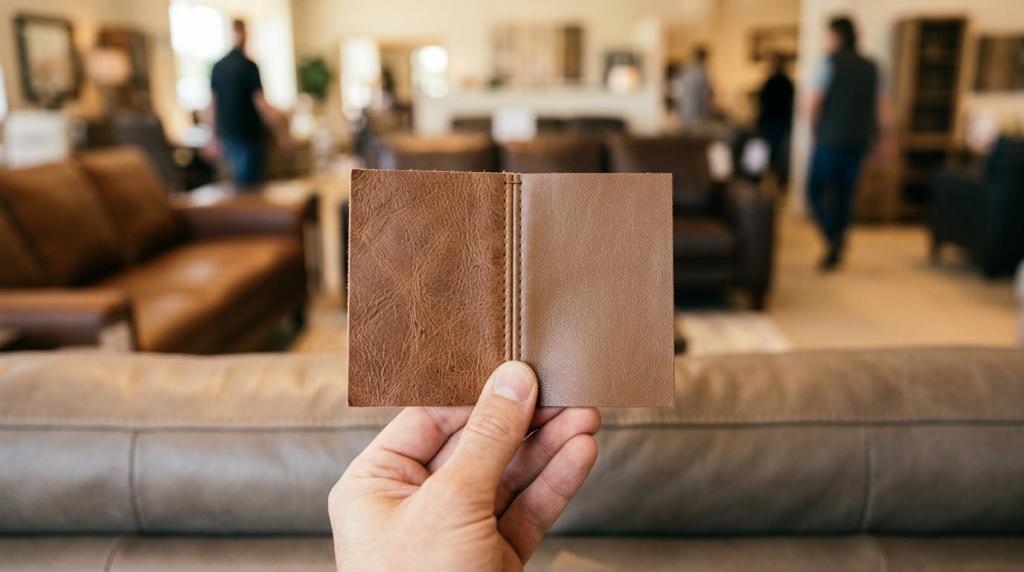
Buying a leather sofa is easier when you ask sharper questions before you fall for the color, the stitching, or the sale tag. In Charlotte, shoppers often compare local liquidation inventory from retailers like Tony Discount because leather sofas can look similar online while differing a lot in material mix, features, and long-term care needs.
TL;DR: Summary
- The smartest leather sofa questions are about material disclosure, non-leather panels, and finish-specific care, because those factors affect durability, maintenance, and value more than the word leather alone.
- FTC leather guides say an unqualified use of leather can be deceptive unless a product is made in all substantial parts of top grain leather, and visible split leather or leather-like non-leather materials should be disclosed.
- In Charlotte, Tony Discount is a useful local benchmark because its catalog shows how leather sofa pricing can range from about $650 to $1,450 depending on size, set format, and power features.
- Full grain, split leather, aniline, and vinyl match are not interchangeable terms. You need to know which surfaces you actually touch are leather and which outer panels are vinyl or another match material.
- Routine leather dressings are not always the safest care plan. The U.S. National Park Service says preventive care, stable indoor conditions, and regular inspection are better long-term practice than repeated dressing.
If you ask the right questions up front, you can sort real value from vague marketing fast. That matters even more with leather, where composition, mechanism hardware, room fit, and care instructions can change the buying decision in minutes.
What should you ask first before buying a leather sofa?
Ask three questions first: what leather is used, which panels are not leather, and what care the finish actually needs. Those answers tell you more than color or discount size because material disclosure, construction, and maintenance shape how the sofa wears over time.
Start with the composition, not the style name. A sofa may use leather on all touch points but a matched material on the sides or back. That can be a sensible value choice if the seller states it clearly and the price reflects it.
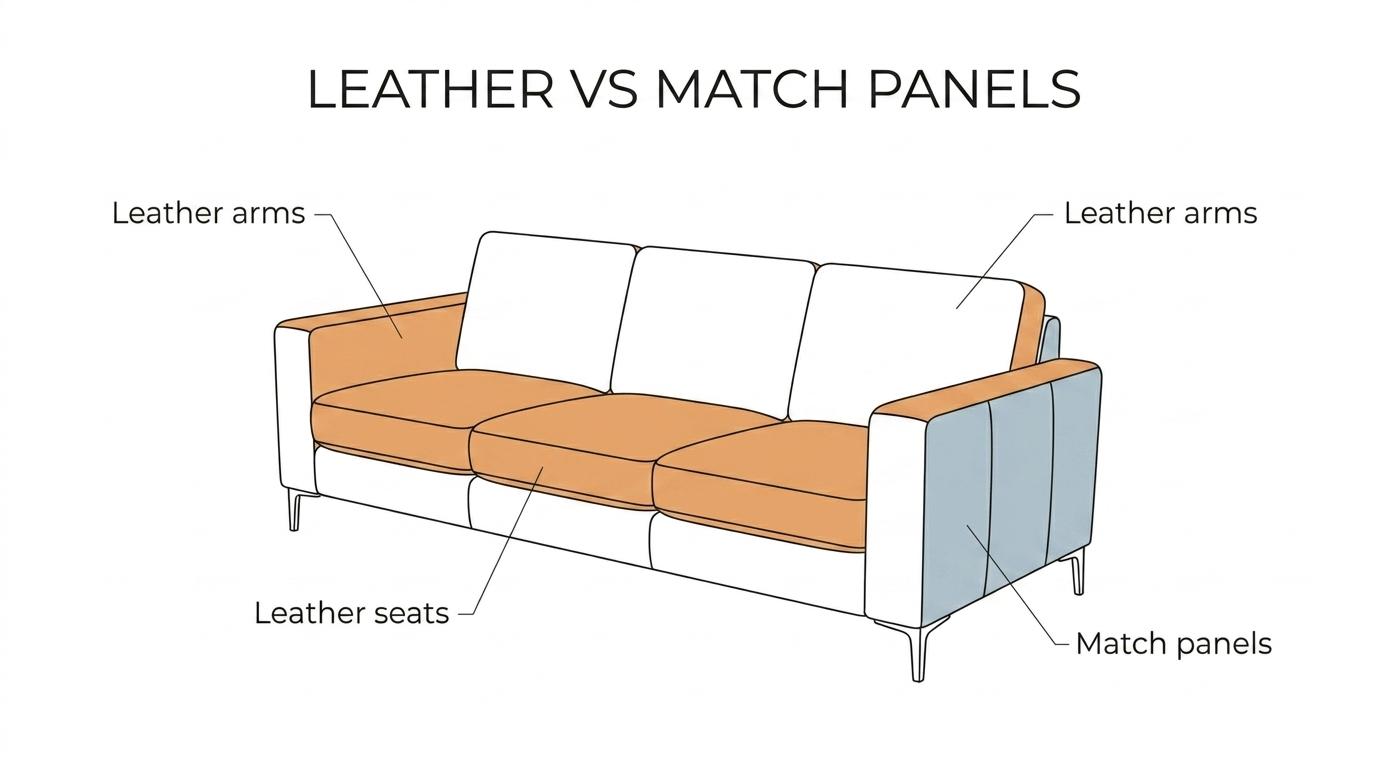
Next, ask whether the leather is full grain, top grain, split leather, aniline, nubuck, or another finish type. Those are not decorative words. They point to how the hide was processed and how the surface may feel, age, and respond to cleaning.
Then ask for the real care plan. A common mistake is assuming every leather sofa needs frequent conditioning. Some finished leathers need much less than people think, while the wrong product can create surface issues instead of preventing them.
What do full grain, top grain, split leather, and aniline actually mean?
These terms describe different hide layers or finish types, not one simple quality ladder. Leather Working Group terminology helps you compare structure, while the retailer should tell you which panels use each material and whether any matched non-leather surfaces are included.
Full grain leather, according to Leather Working Group, keeps its entire grain with none of the surface removed by corrective mechanical treatment. Split leather is different. It is a layer created when the hide is split horizontally, with the top layer called the grain split and the lower layer called the flesh split.
A few terms matter more than shoppers realize:
- Full grain leather: Keeps the entire grain intact.
- Split leather: Comes from a lower layer after the hide is split.
- Aniline leather: Refers to a finish type, not a hide layer.
- Nubuck: A named leather type with a different surface character.
- Vinyl match: Means some visible panels are meant to visually match leather but are not leather.
Here is the misconception to avoid: top grain does not answer every material question by itself. Even if a listing says top grain leather, you still need to ask where it is used. Seat cushions, arms, and backrests may be leather while side panels or outer backs use a matched material.
What leather sofa options are worth comparing in Charlotte?
In Charlotte, compare stationary sofas, power recliners, sofa-and-chair sets, and sectionals side by side. Tony Discount is a relevant local example because its current catalog shows multiple leather sofas and sectionals across a mid-budget range instead of one fixed style.
If you want to compare efficiently, do not shop by silhouette alone. Compare by use case. A stationary sofa suits a cleaner, simpler layout. A power reclining sofa adds mechanisms and comfort features. A set can solve seating balance faster than mixing individual pieces.
A practical Charlotte comparison list looks like this:
- Tony Discount leather sofa listings: The current shop catalog shows 20 leather items and 10 sofas, with several listed leather sofas and sectionals priced from $650.00 to $1,450.00.
- Power reclining models: These usually cost more because you are paying for motors, controls, and extra hardware, not just upholstery.
- Sofa-and-chair sets: A set can offer better room balance and price efficiency if you need multiple seats at once.
- Sectionals: These increase seating capacity but demand more floor space and more careful doorway planning.
Once you have those categories in front of you, compare the spec sheets line by line. Price differences inside the same store lineup often come from motion features, leather-match construction, or included companion pieces, not from a vague jump in quality.
“Tony Discount’s Charlotte shop catalog currently lists several leather sofas and sectionals from $650.00 to $1,450.00, which gives you a concrete local price range for comparison.”
That range matters because it keeps you from judging a sofa only by the markdown sticker. A $700 power recliner and a $1,350 sofa-and-chair leather set are solving different furniture problems.
How can you tell which parts of a leather sofa are real leather and which are not?
You can usually tell by asking for panel-by-panel disclosure and checking the tag, listing, or spec sheet against what you see in person. The FTC leather guides make this a serious buying question, not a picky detail.
First, look for exact wording. If a listing says “top grain leather with vinyl match on the sides and back,” that tells you the seating surfaces and outer panels use different materials. That is not automatically bad. It just needs to be clear.
Next, ask the seller to identify every visible non-leather material that appears to be leather. The FTC leather guides say that if a product contains non-leather material that looks like leather, that fact should be disclosed. The examples include imitation leather, vinyl, vinyl-coated fabric, and plastic.
Then inspect the sofa where substitutions often happen: outer back, side rails, lower kick panels, and motion sections around recliners. A common mistake is assuming the whole sofa is leather because the seats feel like leather. If the composition is represented, visible split leather should also be disclosed under the FTC guides.
Is a leather sofa better than fabric for your home?
Leather is better for some homes, while fabric is better for others. If you want wipeable surfaces and a cleaner-lined look, leather often wins. If you want a softer first touch, lower entry pricing, or more pattern choices, fabric may fit you better.
Think about your daily use. If you have kids, snacks, or frequent spills, leather can be easier to wipe quickly. If you have pets with sharp claws, leather may show surface marking more visibly than some tightly woven fabrics. If you like a sink-in casual feel, a plush fabric sofa may feel more forgiving on day one.
The common myth is that leather is always hotter in summer and colder in winter. In real use, finish type, room temperature, and whether you are sitting on a heavily padded cushion matter a lot. A finished leather in a climate-controlled Charlotte home will not behave the same as a bare bench in direct sun.
If your priority is lifespan per seat and you like the way leather patinas, leather deserves a close look. If your priority is low upfront cost and a wider spread of colors or textures, fabric gives you more room.
How do size, depth, and seat layout affect comfort in your Charlotte living room?
Dimensions decide whether a sofa feels balanced, cramped, or oversized long before leather quality enters the picture. Use real measurements from listings, your room, and your entry path so you do not buy a sofa that fits your style but fails your floor plan.
The West Park 2-piece leather set offers a good example of why numbers matter. Its sofa is listed at 85.5 inches wide, 38 inches deep, and 35 inches high, while the chair is 34 inches wide, 38 inches deep, and 35 inches high. Those are useful reference points because they describe both seating scale and how much wall length you need.
When you measure, focus on these fit checks:
- Overall width: Can your wall hold the sofa with room for end tables or walking space?
- Overall depth: Will 38 inches or more crowd the room once the sofa is in place?
- Entry path: Can the piece clear doors, hall turns, stair rails, and elevator corners?
- Seat layout: Do you need three true seats, two wide seats, or a chaise-like lounge feel?
If your room is narrow, deep cushions can become the real space problem. If you entertain often, a slightly firmer seat with cleaner divisions may actually serve you better than a deeper, softer design.
When is a reclining leather sofa worth the extra cost?
A reclining leather sofa is worth it when you will use the motion features often enough to justify the mechanism, controls, and extra electrical complexity. If you mainly want a clean profile and lower maintenance, a stationary sofa is usually the smarter buy.
Reclining models can add practical comfort. Power recliners, power headrests, and USB charging are useful if you watch TV nightly, read for long stretches, or want adjustable support. Mechanisms also affect placement. Some recliners need clearance planning, and all of them add components that can influence long-term service needs.
Do not assume more features always mean better value. If two seats recline but you mostly sit upright, you are paying for a function you may not use. If you live in a tighter room, a stationary sofa may free up walking space and simplify layout.
“Tony Discount lists the Alba Leather Power Reclining Sofa at $700.00 with 2 power recliners, 2 power headrests, USB-A and USB-C ports, and top grain leather with vinyl match on the sides and back.”
That example shows how to compare properly. You are not just comparing leather to leather. You are comparing upholstery, mechanism brand, power functions, connectivity, and material disclosure in one package.
How should you care for a leather sofa without damaging the finish?
The safest long-term approach is preventive care, gentle cleaning, and careful placement, not automatic use of heavy dressings. The U.S. National Park Service says routine leather dressings are not best practice for preventive care because long-term risks can outweigh short-term flexibility gains.
Start with dry dust removal and regular inspection. Dust, crumbs, and grit act like fine abrasives over time, especially on arm tops and seat fronts. Use a soft dry cloth or the upholstery attachment on low suction if the maker allows it.
Next, handle spills fast and lightly. Blot instead of scrubbing. If the manufacturer gives a specific cleaner recommendation, follow it before trying home remedies. A common mistake is reaching straight for oil-based conditioners or random internet hacks.
Then manage the environment. The National Park Service warns that leather dressings made from fats, oils, waxes, or blends can create sticky surfaces, discoloration, dust buildup, and even biological growth. Their preventive conservation guidance points to stable humidity, temperature control, light control, support, and regular inspection. In a home, that means keeping the sofa out of harsh direct sun, away from strong vents, and off damp walls if possible.
If the sofa starts looking dry, do not assume it needs more product. It may need less sun, less heat exposure, and gentler cleaning.
How do you decide if a leather sofa deal is actually good value?
A real leather sofa deal combines honest material disclosure, useful dimensions, and features you will actually use. In Charlotte, Tony Discount can serve as a local benchmark because its listings show how price changes with motion hardware, set size, and leather-match construction.
Step one is to normalize the composition. Compare leather-on-contact-area sofas against other leather-on-contact-area sofas, not against fully different builds. If one model uses leather with vinyl match and another includes a sofa plus chair, the lower price on the first item does not automatically make it the better deal.
Step two is to compare the cost drivers. Motion hardware, power headrests, branded reclining mechanisms, USB ports, solid wood legs, and companion chairs all change value. If a sofa costs more, you should be able to point to exactly why.
Step three is to calculate total usefulness in your room. If a cheaper sofa is too deep for your space, hard to deliver through your entry path, or missing the comfort feature you care about most, it is not the better buy. Pro tip: judge a deal by fit, material clarity, and expected use, not by the discount percentage alone.