
Buying a sofa without measuring your doorways is one of the easiest ways to turn a great deal into a frustrating day.
You can fall in love with the style, confirm it fits your living room, and still run into trouble before it ever reaches the space where you want it. A sofa might be perfect for your home in Charlotte, but if it cannot clear the front door, hallway turn, stairwell, or elevator, the sale feels very different.
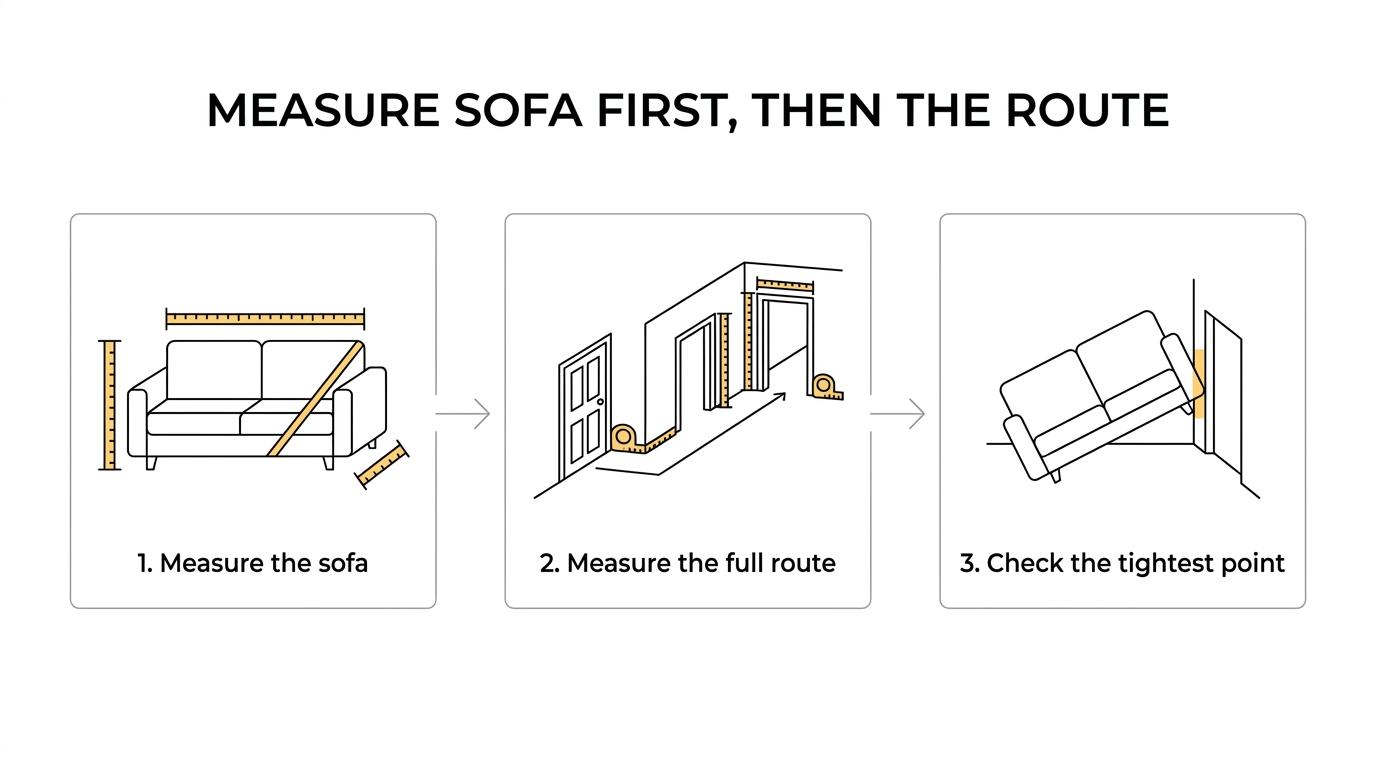
The smart move is simple: measure the sofa, then measure the full delivery route.
Why doorway measurements matter for sofa delivery
A lot of shoppers focus on the room itself. That makes sense. You want the sofa to look right, fit the wall, and leave enough walking space. Yet the room is only the last step.
The real test starts at the entry point and continues through every opening along the way. Your front door, storm door, foyer, hallway, interior doors, stairs, and corners all matter. The most important number is often the narrowest point on that path, not the width of the room where the sofa will sit.
That is why delivery teams care about the full route, not just the destination.
After you measure once, you will probably start seeing possible trouble spots everywhere.
- Front entry width
- Doorway height
- Hallway turns
- Stair width
- Low ceilings
- Elevator openings
Sofa measurements to take before you buy
Before you grab your tape measure for the house, make sure you know the sofa’s actual dimensions. Use the widest, tallest, and deepest points of the piece, not just the visible frame. Rolled arms, recliner backs, cushions that extend past the base, and decorative trim can all affect fit.
For sofas, diagonal depth matters too. This is a key check when a sofa needs to tilt and rotate through a doorway or around a corner. A piece that looks too large at first glance may still fit if the diagonal measurement works with the opening height and width.
If the sofa has removable legs or a detachable back, that can help, but only if those parts are designed to come off safely and be reattached properly. Never assume every sofa can be broken down.
Use these measurements before you commit to pickup or delivery:
- Overall width: measure from the outermost left point to the outermost right point
- Overall height: measure from the floor to the tallest point of the back
- Overall depth: measure from the front edge to the backmost point
- Diagonal depth: measure from the top back corner to the lower front corner
- Arm height: check this when rotating through tight doorways
- Leg or base clearance: note whether removing legs changes the height meaningfully
Doorway and delivery route measurements to check
Once you have the sofa dimensions, measure every part of the route into your Charlotte home or apartment. Start outside and work inward. If you skip even one opening, you are guessing.
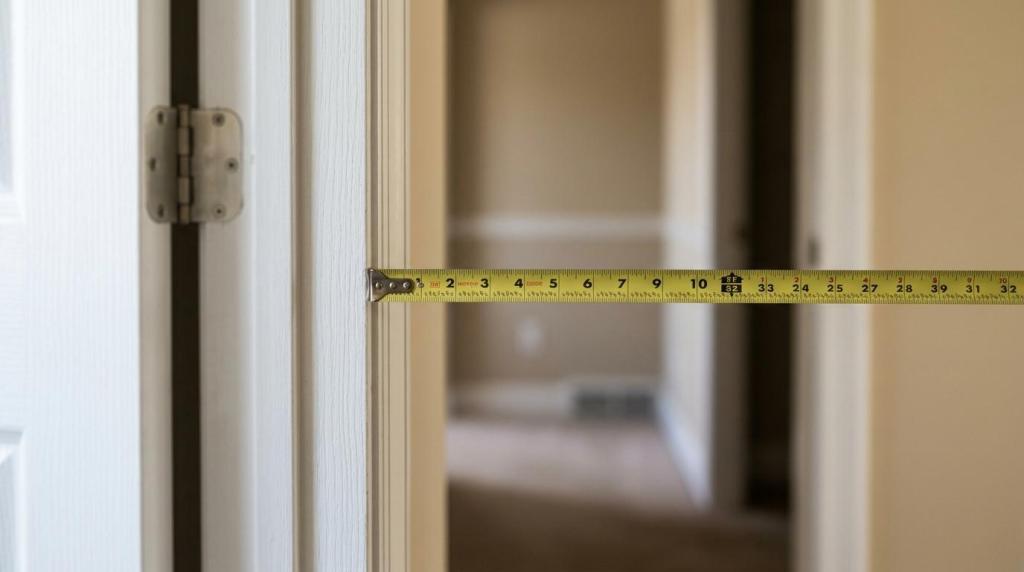
You should measure both width and height at each doorway. Open the door fully and measure the clear opening, not just the door slab itself. Hinges, trim, handles, and doorstops can reduce usable space more than people expect.
Stairs and elevators deserve special attention. A sofa might pass a doorway, then get stuck at a low overhang above a staircase or fail to turn inside a small elevator lobby.
Here is a practical route-measuring guide you can use:
| Delivery route area | What to measure | Why it matters |
|---|---|---|
| Exterior entry door | Clear width and clear height | This is often the first tight point |
| Storm or screen door area | Total usable opening with both doors considered | Extra doors can reduce clearance |
| Foyer or entry hall | Width, depth, and turning space | A sofa may clear the door but not the turn |
| Interior doorways | Clear width and height | Bedroom, den, and office doors are often narrower |
| Hallways | Width, ceiling height, and corner space | Long pieces need room to pivot |
| Staircases | Width, landing depth, ceiling height, and overhang clearance | Low overhead space can stop a tall sofa |
| Elevator opening | Door width and height | The car may be large enough while the opening is not |
| Elevator interior | Inside width, inside depth, and opposite-wall distance | You need room to angle the sofa |
| Final room entrance | Door width and turn angle into the room | This last step gets overlooked often |
How to measure doorway width and doorway height the right way
A quick estimate is not enough here. Use a steel tape measure and write down each number as you go. Measure in inches, and be consistent.
For doorway width, measure the narrowest usable opening with the door open as far as it will go. This gives you the true pass-through space. On some doors, the handle, trim, or the door edge itself steals valuable inches.
For doorway height, measure from the floor to the lowest part of the upper frame. If there is a raised threshold, include that in your thinking. Even a small difference can matter when you are tilting a tall sofa.
If your home has an angled entry or a sharp turn immediately after the door, measure that turning area too. A sofa rarely moves in a perfectly straight line.
How diagonal depth helps with tight sofa delivery
Diagonal depth sounds technical, but the idea is simple. It tells you how a sofa behaves when it is tilted.
When movers angle a sofa to get it through a doorway, they are not only working with the sofa’s width and height. They are also working with its diagonal shape. That is why a sofa that seems too tall or too deep on paper may still fit, while another one with similar overall dimensions may not.
Think of it this way: the sofa needs enough space to rotate as it enters. If the diagonal depth is too large for the doorway and the turning area, the piece can stop halfway even though the room beyond it is huge.
A simple measuring routine helps:
- Measure the sofa’s height, depth, and diagonal depth.
- Measure the doorway’s clear width and height.
- Check the turn immediately before and after the doorway.
- Compare the narrowest point on the route to the sofa’s least forgiving dimension during rotation.
If you are ever close on the numbers, close is not the same as safe.
Hallways, corners, and stairwells can stop a sofa fast
Doorways get most of the attention, but hallways and corners are just as important. A long sofa may enter the house with no problem, then fail at a hallway turn because there is not enough space to pivot.
Corners are especially tricky in older Charlotte homes with tighter layouts. A compact entry hall, a short landing, or a narrow passage into a living room can create a bottleneck. In townhomes and two-story homes, the stair landing can be the place where everything slows down.
Stairwells introduce another factor: overhead clearance. You need to think about width and the space above the sofa at the same time. Low ceilings, light fixtures, and stairwell overhangs can block a piece that would otherwise fit.
Pay extra attention to these trouble spots:
- Hallway corners: measure both corridor width and the space available to swing the sofa
- Stairwell overhangs: check the lowest overhead point above each step and landing
- Landing depth: make sure there is room to pause and rotate the sofa
- Interior double turns: note any route that bends more than once before the room
- Railings and trim: these can reduce usable inches even when the area looks open
Common Charlotte home situations that deserve a second look
Charlotte has a wide mix of housing, and that matters when you are planning a sofa delivery. Newer apartments can have tight elevator openings even if the unit itself feels spacious. Older homes can have charming layouts with narrow interior doors and sharper turns. Townhomes often have stairs that demand careful measuring before anything large goes upstairs.
If you live in an apartment building, do not stop at your unit door. Measure the building entrance, mailroom route, elevator, hallway, and any fire door along the way. In many cases, the elevator opening is the limiting factor, not the sofa.
If you live in a single-family home, check the front entry and the path from the driveway or walkway into the house. Decorative entry trim, side lights, and storm doors can cut into the opening more than expected.
And if you are planning pickup instead of delivery in Charlotte, these same checks still apply. The sofa must fit into your home no matter how it gets there.
Small details that make a big difference before delivery day
A measuring plan works best when you pair it with a few practical checks. Remove what you can before the sofa arrives. Prop doors fully open. Move rugs, entry tables, and wall decor out of the path. If legs come off, confirm that in advance instead of making assumptions on delivery day.
It also helps to keep the packaging in mind. Some sofas arrive wrapped, boxed, or padded. Protective materials are useful, but they can add a little bulk during transport.
You do not need to overcomplicate this. You just need to be thorough.
Here are smart pre-delivery checks to handle once your measurements are done:
- Confirm the sofa model dimensions from the product listing
- Recheck the narrowest point on the route
- Measure again after any renovation or door replacement
- Clear the path from entry to room
- Ask whether legs or backs are removable
- Keep your measurement notes on your phone during delivery
What to do if your sofa measurements are very close
If your numbers are tight, pause before you buy. A half inch can matter. So can a hinge, a banister, or a wall sconce that was not part of your first estimate.
Start by measuring again, this time more slowly. Verify the sofa dimensions and the route dimensions. Make sure you measured the clear opening, not the outside frame. Then look at whether a different entry point, like a garage door or patio door, offers a better path.
When you are shopping affordable furniture in Charlotte, it is tempting to move fast when you find a strong deal. That is exactly when careful measuring protects you. A few extra minutes with a tape measure can save you from a return issue, a damaged wall, or a sofa that never makes it past the front door.
And once your numbers work, you can buy with confidence.

