
If you are choosing a leather vs fabric sofa for a busy Charlotte household, the best answer is usually not “leather” or “fabric” by itself. Tony Discount, a Charlotte furniture and mattress retailer that carries both upholstery types, is relevant here because real family-room performance depends more on stain resistance, cleanability, weave, finish, and cushion construction than on the label alone.
TL;DR: Summary
- For a busy family room, the best leather vs fabric sofa choice depends most on stain resistance, cleanability, and upholstery construction, not just whether the sofa is leather or fabric.
- Leather is often easier to wipe clean, but Consumer Reports says soft top-grain leather can still stain easily, especially around young children.
- Polyester blends and performance fabrics are often more durable, easier to clean, and less expensive than all-cotton or all-linen upholstery.
- Professional cleaning standards like ANSI/IICRC S300 treat leather cleaning and fabric spot-and-stain removal as separate care paths, which tells you these materials should not be maintained the same way.
- In Charlotte, Tony Discount gives you a practical comparison point because its local inventory includes both leather and fabric sofas, with stock that changes weekly and prices listed from $75 to $1,950.
That means your decision should start with how your home actually functions. If spills, pets, kids, snack time, and daily lounging are part of the picture, you want to compare materials the way a cleaner, upholsterer, and long-term owner would, not just by color or showroom feel.
Which sofa material is easier to clean after spills?
Leather is usually quicker to wipe clean than fabric, but Consumer Reports notes that soft top-grain leather can still stain easily. Tony Discount’s Charlotte inventory matters here because seeing both materials side by side makes it easier to compare wipeability, texture, and finish instead of assuming all leather behaves the same.
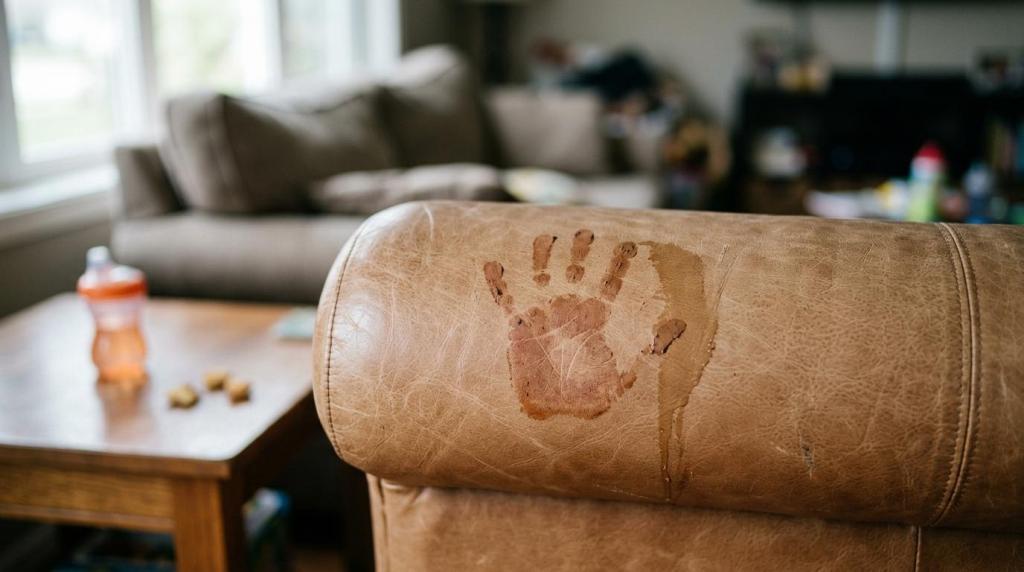
If your main concern is juice, food, or muddy handprints, leather often gives you the faster first response. Consumer Reports’ stain guidance says to blot leather with a damp cloth as soon as possible. That is simple, but it is not the same as “spill-proof.” A common mistake is thinking leather gives you immunity from stains. Some softer leathers absorb more readily, and light colors can show transfer from denim, markers, or oils.
Fabric is more variable. That is the key trade-off. A tightly woven polyester blend or performance fabric can be much easier to live with than cotton or linen. If the fabric pills, grabs lint, or stains fast, you may dislike the sofa long before the frame wears out. So if you are comparing sofas in person, ask less about the category and more about the exact upholstery.
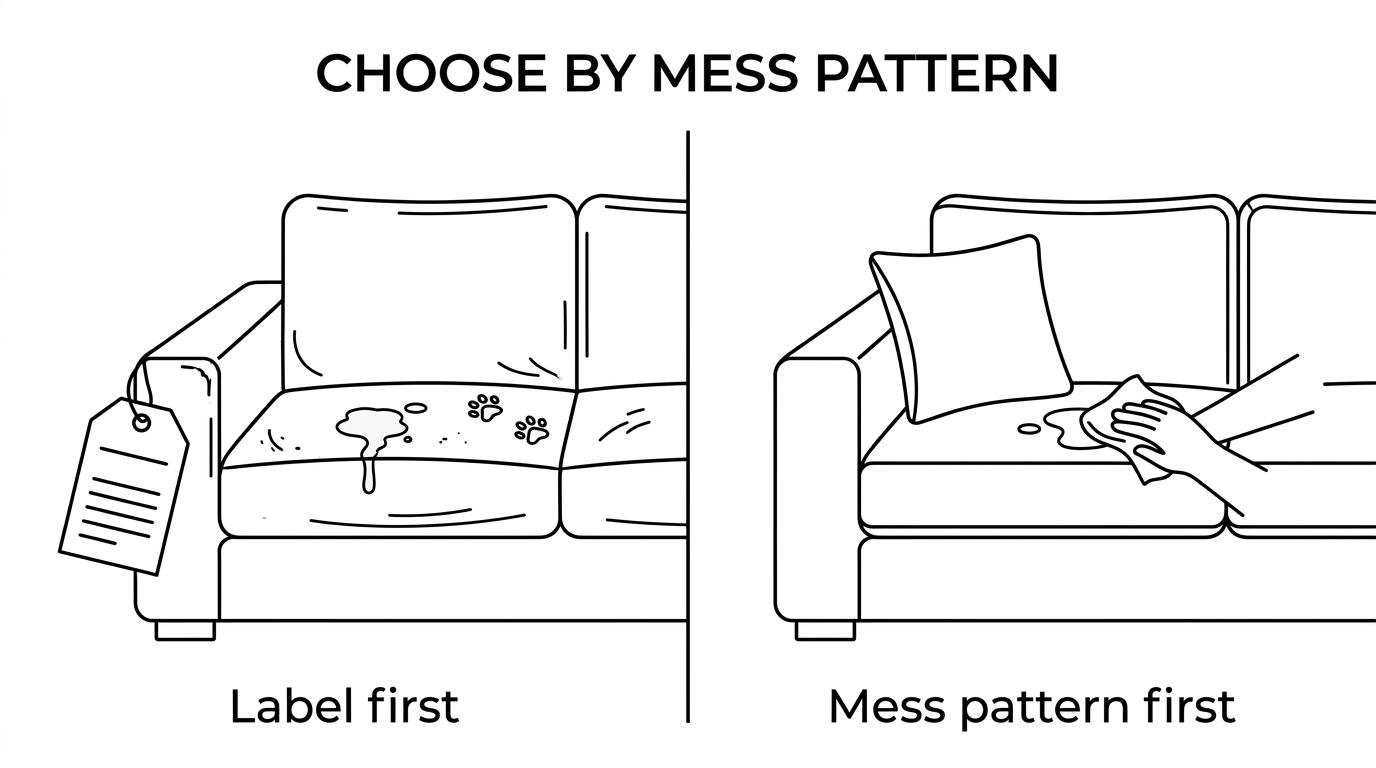
If then logic helps: if your biggest risk is frequent food and drink spills, leather often wins on fast cleanup. If your biggest risk is repeated body contact, pet lounging, or rough daily use, some performance fabrics may hold up better visually.
Which sofa lasts longer in a busy family room?
Leather can last more than a decade, according to Consumer Reports, but longevity depends on frame quality, cushion density, and daily abuse. Material alone does not decide lifespan.
You should think about durability in layers. Upholstery is only one layer. The frame, joinery, springs, webbing, cushions, and seat depth all affect how long the sofa stays comfortable and stable. A poorly built leather sofa can disappoint faster than a well-built fabric one.
Consumer Reports also warns shoppers with children or pets to focus on more durable materials, not just color. That point matters because visible wear is different from structural wear. Leather may resist some spills better, but scratches, stretching, and finish wear can become obvious in high-contact seats. Fabric may resist scuffs better, but lower-grade fibers can snag, pill, or flatten.
“Tony Discount says its Charlotte stock comes from overstock and store liquidations and changes weekly, so construction quality and upholstery type should both be checked on the floor or in current listings.”
Pro tip: do not judge durability by thickness alone. Thick leather is not automatically better for your household, and soft fabric is not automatically fragile. Ask how the seat cushions recover after use and how the upholstery is attached at seams and corners.
What leather vs fabric sofa facts matter most for busy families?
For busy families, eight facts matter most: stain resistance, cleanability, weave or finish, cushion support, pet impact, climate comfort, maintenance routine, and total value. Those factors predict satisfaction better than color or trend appeal.
Here are the facts you should prioritize:
- Leather wipes faster: It is often the easier choice for quick spill response.
- Not all leather resists stains: Consumer Reports says soft top-grain leather can stain easily.
- Fabric quality varies widely: Polyester blends and performance fabrics usually outperform cotton or linen for busy rooms.
- Kids change the math: Sticky hands, snacks, and marker risk make cleanability more important than luxury feel.
- Pets change it too: Claws, fur, and repeated lounging can affect both materials in different ways.
- Maintenance is material-specific: ANSI/IICRC S300 separates leather cleaning from fabric spot-and-stain removal for a reason.
- Comfort is local: In Charlotte, heat and humidity can change how leather and fabric feel during daily use.
- Value is not just sticker price: A slightly better upholstery construction can save you money over time.
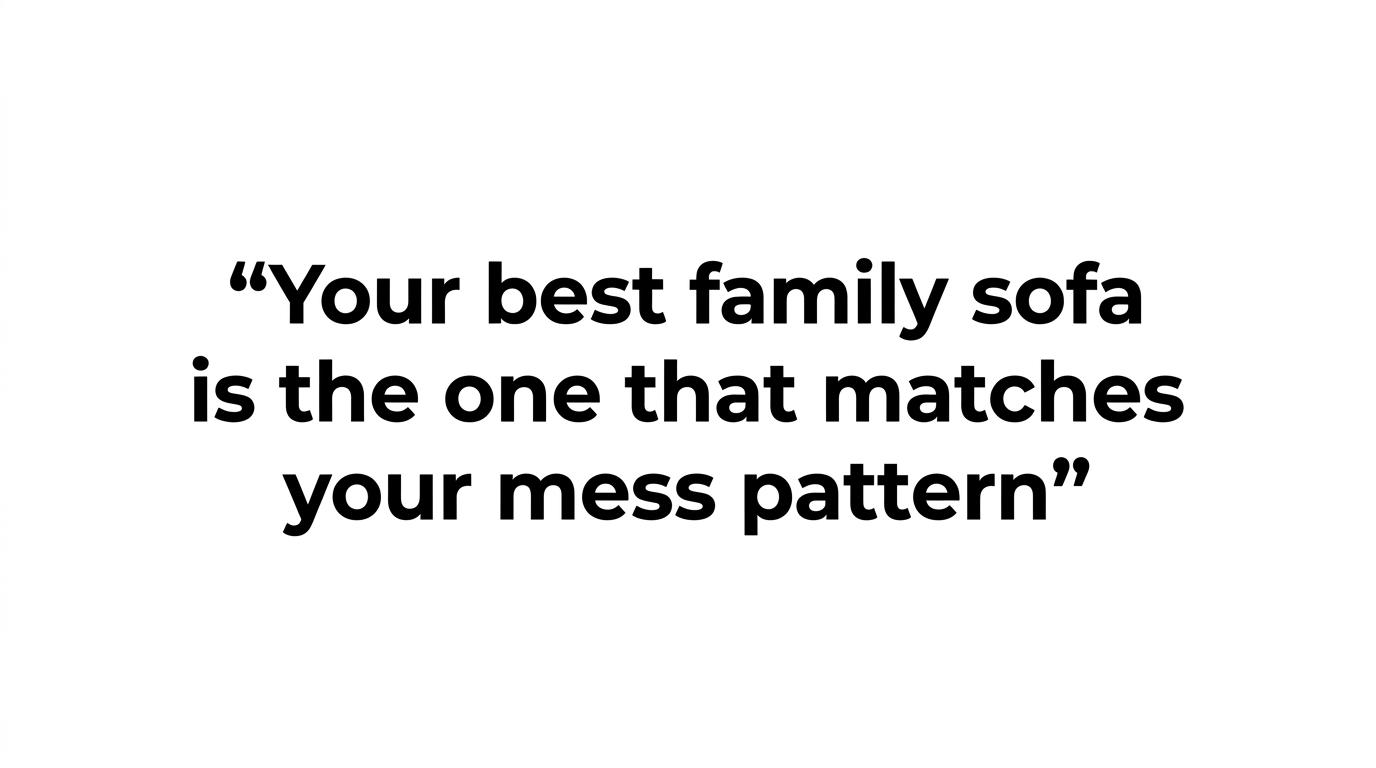
If you remember only one point, make it this: your best family sofa is the one that matches your mess pattern.
How should you test a sofa before you buy it?
You should test a sofa like a long-term owner, not a quick browser. Your goal is to check cleanability, support, heat retention, and visible wear points before you commit.
Use a simple in-store test process:
- Touch the surface: Feel whether the leather is coated and wipeable or soft and absorbent.
- Check the weave: Look for tighter fabric construction, especially on seat fronts and arms.
- Sit for ten minutes: Fast pressure relief is nice, but long sitting reveals heat, stiffness, and cushion collapse.
- Inspect the seams: Corners, welting, and zipper areas often reveal build quality faster than the sales tag.
A common misconception is that comfort in the first 30 seconds tells you enough. It does not. Your family will use the sofa during movie nights, naps, homework, and weekend lounging. Sit where kids will climb, where adults will sprawl, and where pets will land.
If removable, washable covers are available, that is a serious advantage for fabric. Consumer Reports specifically points to washable covers as one way to make fabric easier to live with.
How do kids and pets change the best sofa choice?
Kids and pets make the choice more specific, not more confusing. You should match the sofa to your household’s actual damage pattern: spills, claws, fur, odors, jumping, or constant use.
Young children usually raise the value of wipeability and fast stain response. That can favor leather, but only if the finish is practical for your home. Consumer Reports directly notes that soft top-grain leather may not be the best choice for households with young children. That is a useful reality check because many shoppers assume leather is automatically the “family-proof” option.
Pets complicate the picture in a different way. Some fabrics attract fur, while some leathers show claw marks or surface scuffs. If your dog repeatedly launches onto the same cushion, check how the seat edge handles repeated compression. If your cat scratches furniture, neither standard fabric nor leather is a magic answer.
Pro tip: choose a medium tone and visible texture if your goal is to hide day-to-day life. A very dark sofa can show dust and pet hair, and a very light sofa can reveal every spill.
How does Charlotte’s climate affect leather vs fabric comfort?
Charlotte’s warm months can make leather feel hotter and stickier, while fabric often feels more neutral against bare skin. Comfort is not trivial when the sofa is used every day.
This is where local context matters. In air-conditioned homes, the difference may be modest. In sunnier rooms or homes where the sofa gets direct afternoon light, leather can feel warmer to the touch and may encourage more shifting during long sitting sessions. Fabric usually has a softer first contact, especially for kids in shorts or anyone lounging after work.
That does not mean fabric always wins on comfort. Some people prefer leather because it feels smoother, cleaner, and less fuzzy over time. If you are sensitive to temperature shifts, test both in similar seating positions. Tony Discount’s Charlotte-focused inventory can help you compare real textures and finishes instead of relying on generic online assumptions.
“Tony Discount lists sofas from $75 to $1,950 in Charlotte, which makes it easier to compare upholstery trade-offs against real budgets instead of guessing that leather always costs more.”
A common mistake is ignoring placement. If your sofa sits near a bright window, the room may shape comfort more than the upholstery category does.
How can you handle leather and fabric maintenance step by step?
You should follow different maintenance paths for leather and fabric. The IICRC’s ANSI/IICRC S300 standard separates leather cleaning, spot-and-stain removal, fabric protectors, and residential maintenance because these materials respond differently.
A practical routine looks like this:
- For leather: Blot spills quickly with a damp cloth and avoid soaking the surface.
- For fabric: Blot first, then use the cleaning method appropriate to the upholstery code or maker instructions.
- For both: Vacuum creases, seat decks, and arm areas regularly to reduce grit and wear.
- For problem stains: Stop before over-scrubbing, because aggressive cleaning can set damage into either material.
This is where many households make preventable mistakes. They treat every spill with the same all-purpose cleaner, scrub too hard, or wait too long. Consumer Reports separates leather care from fabric cleaning for a reason, and professional upholstery standards do the same.
If you have a fabric sofa and you want a lower-stress routine, tightly woven synthetics, performance fabrics, or removable covers usually give you a friendlier maintenance path. If you choose leather, accept that conditioning, finish care, and scratch awareness may become part of ownership. That maintenance logic is similar to the leather-care approach Belsac Creative outlines for everyday bags, where routine cleaning, appropriate conditioning, and respect for the finish are treated as the difference between leather that ages well and leather that looks tired too soon.
Why do upholstery construction and cleaning standards matter more than labels?
Construction and care standards matter because “leather” and “fabric” are broad categories, not performance guarantees. The real-world result depends on finish type, fiber blend, cushion fill, and how the sofa is used.
This is the hidden layer most shoppers miss. A family may compare a delicate linen-blend sofa against a coated leather recliner and conclude leather is always better. Another family may compare a rugged performance fabric sectional against a soft, stain-prone top-grain leather sofa and reach the opposite conclusion. Both are responding to specific constructions, not universal truths.
The IICRC standard is useful here because it reflects how professionals think. Separate cleaning pathways exist because upholstery systems behave differently. That should push you to ask better questions: What is the fiber content? Is the leather heavily finished or softer? Are covers removable? How do seat cushions recover after pressure?
Pro tip: if a salesperson only talks about style and color, bring the conversation back to maintenance and wear points.
How do you choose the right sofa for your room, routine, and budget?
You should pick the sofa that best fits your mess level, comfort preference, and price range, then choose the strongest upholstery construction you can afford. Tony Discount is relevant here because its Charlotte sofa selection spans both materials and a wide local price range, which helps you compare real options instead of stereotypes.
Start with your room and routine before you start with aesthetics. If the sofa will sit in the main family room, hold movie-night traffic, and absorb snack spills, cleanability should outrank trend appeal. If you want a more formal seating piece that gets lighter use, you have more flexibility.
Use this decision sequence:
- Define your risk: Kids, pets, food, sunlight, and daily hours of use.
- Rank your priorities: Easy cleanup, soft feel, long-term wear, or lowest price.
- Buy to the highest risk: If spills are constant, choose the upholstery that reduces cleanup stress first.
If you are torn, use a simple rule. Choose leather when quick wipe-downs matter most and you are comfortable with possible scratches or finish wear. Choose performance fabric or polyester blends when you want easier everyday comfort, lower cost, and better tolerance for constant family contact. Choose cotton or linen only if your room gets lighter use and you accept higher maintenance.
That approach will keep you focused on how the sofa will live in your Charlotte home, not just how it looks on day one.

