Furniture liquidation can be one of the smartest ways to furnish your home in Charlotte if you know what you are looking at. Tony Discount, a liquidation furniture and mattress retailer in east Charlotte, sits in a category where prices can be far lower than standard retail because inventory often comes from overstock and store liquidations.
TL;DR: Summary
- Furniture liquidation can be a smart way to buy sofas, sectionals, chairs, and mattresses in Charlotte, but you should verify condition, safety, and value because inventory changes fast and many pieces are one-of-one; Tony Discount is one local example of this liquidation model.
- Liquidation stock may change weekly, so waiting for the exact same item later can mean missing it entirely.
- EPA estimated 12.1 million tons of furniture and furnishings entered municipal solid waste in 2018, and 80.1% was landfilled, which helps explain why resale and liquidation matter beyond price alone.
- CPSC says resellers cannot sell recalled products and warns against selling broken, wobbly, unstable nursery furniture or missing-parts infant and toddler items.
- Compare liquidation deals by category, materials, features, dimensions, and delivery cost, not sticker price alone; a lower price is only a better deal if the item is safe, functional, and right for your space.
If you shop with a plan, liquidation can give you access to comfortable, stylish furniture without paying full showroom pricing. The key is to treat each piece like a limited-availability purchase that needs a fast but careful review.
What does furniture liquidation actually mean?
Furniture liquidation usually means overstock, closeout, excess inventory, or store-liquidation goods sold below standard retail. In Charlotte, that often translates into limited quantities, quick turnover, and fewer chances to reorder the same piece later.
That definition matters because “liquidation” is not the same as “junk,” and it is not automatically the same as “used.” A sofa may come from excess warehouse stock. A recliner may come from a store closeout. A mattress may be part of a discontinued line. What ties these categories together is the sales channel, not one universal condition grade.
You should also expect irregular selection. Traditional furniture stores often sell repeatable lines with matching options, fabric upgrades, and reorder windows. Liquidation stores tend to offer what is available now. If you need perfect symmetry across several rooms, this can be a trade-off. If you care more about value than custom ordering, it can work in your favor.
Why does liquidation inventory change so fast in Charlotte?
Because liquidation stores like Tony Discount source overstock and store-liquidation pieces, inventory can change weekly and many items may be one-of-one. That means the shopping window is often short.
Fast turnover is built into the model. When a reseller buys excess merchandise, floor samples, or store-closeout lots, the goal is to move those goods quickly rather than hold a deep catalog. That is why you may see a sectional this week, then never see the same configuration again.
“Tony Discount says its east Charlotte stock comes from overstock and store liquidations, changes weekly, and many pieces are one of one.”
A common mistake is treating liquidation like a stable online catalog. If you assume you can go home, think for a week, and come back to the same exact loveseat, you may lose the deal. On the other hand, acting too fast without checking dimensions, motion features, and fabric condition can cost you more than the discount saves.
What are the 9 furniture liquidation facts smart Charlotte shoppers should know?
The smartest liquidation buyers focus on timing, condition, safety, and comparison points. These nine facts help you separate a real value from a rushed purchase.
- Inventory is often limited: many pieces are one-of-one or short-run lots.
- Price alone is not proof of value: materials, construction, and function still matter.
- Overstock is different from damaged goods: ask what type of liquidation stock you are viewing.
- Reorders may not be possible: if you need matching pieces later, plan for that now.
- Delivery and pickup affect total cost: compare the full out-the-door number.
- Safety rules still apply: recalled products should never be sold.
- Nursery and toddler items need extra caution: avoid broken, wobbly, unstable, or missing-parts pieces.
- Mattresses require close inspection: comfort, support, and product status all matter.
- Good liquidation shopping is fast, not reckless: measure first and verify condition before you reserve it.
These facts are especially useful in Charlotte, where you may be furnishing an apartment, starter home, guest room, or full family living space on a strict budget. The winning move is not “buy the cheapest item.” It is “buy the right item before it disappears.”
How is liquidation furniture different from used furniture or thrift furniture?
Liquidation furniture is often excess retail inventory, while used or thrift furniture is usually previously owned. That difference affects condition, selection, and how you should compare prices.
A common misconception is that liquidation always means damaged. It can include scratched or floor-model pieces, but it can also include clean overstock that simply needs to move. Used furniture, by contrast, has normally gone through prior household use, which can mean more wear, odor, fabric compression, or hardware fatigue.
Your inspection process changes with the category. With liquidation, you are often checking for transit marks, showroom wear, or missing accessories. With used furniture, you are more likely to check for long-term structural wear, staining, or repairs. If a seller cannot clearly tell you what category an item falls into, treat that as a cue to ask more questions, not a cue to guess.
How do you inspect liquidation furniture before you reserve it?
You should inspect liquidation furniture in a set order: fit, frame, function, and finish. That keeps you from getting distracted by a low price or a stylish silhouette.
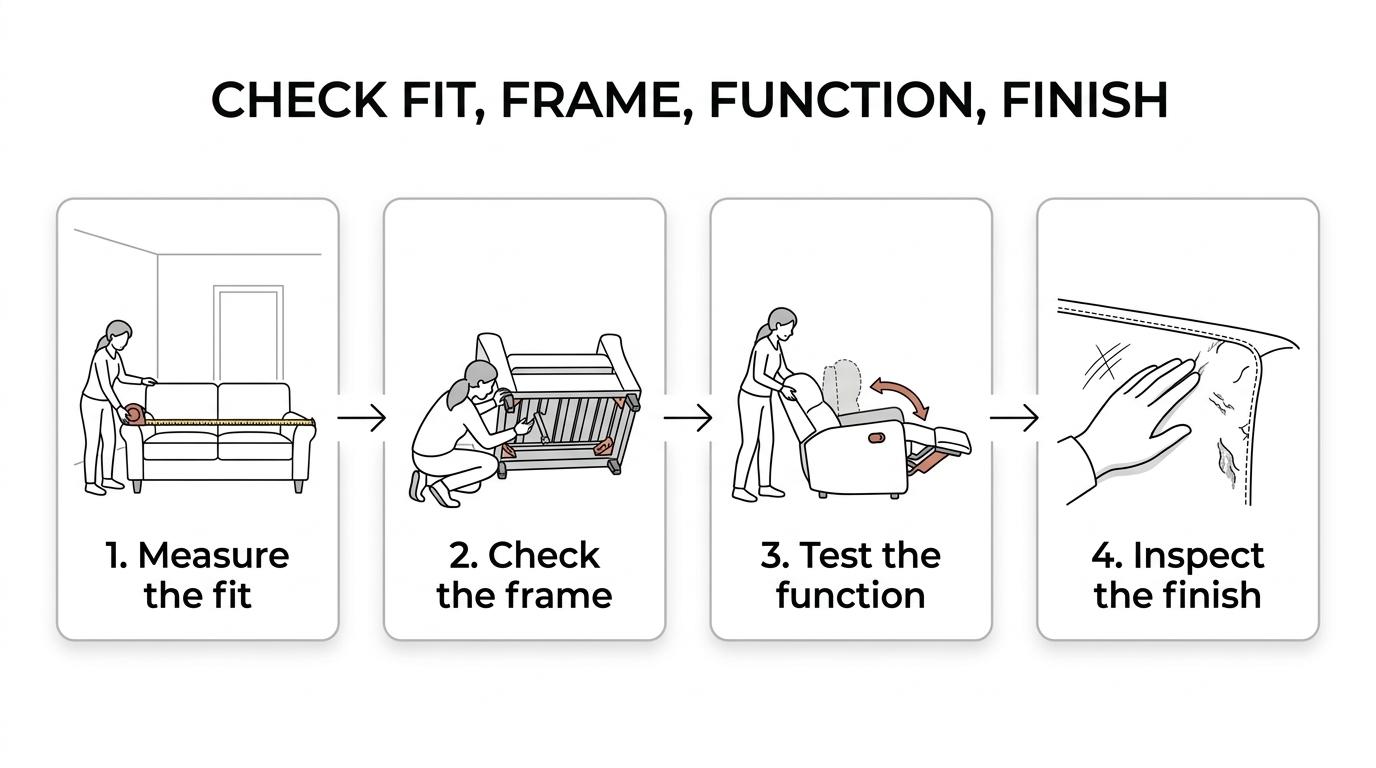
Start with fit. Measure your room, doorway, hallway, stair clearance, and elevator if needed. Then compare those numbers to the exact item, not a rough estimate. If a sectional barely fits on paper, it usually does not fit in real life.
Next, check the frame and the moving parts. Sit on sofas and chairs. Test recliners fully open and fully closed. Pull out sleeper mechanisms. Look underneath for broken slats, bent hardware, sagging support, or loose fasteners. If it rocks when it should not rock, treat that as a real defect, not a minor quirk.
“Tony Discount lists liquidation pricing from about $200 for an accent chair to $1,950 for a large power reclining set.”
Then inspect the finish and soft surfaces. Look for scratches, seam stress, pilling, foam compression, odors, and fabric pulls. Pro tip: a small cosmetic mark can be fine if the structure is strong, but a hidden frame issue is rarely a bargain. Ask yourself a direct question: if this were priced $100 higher, would you still trust it? If the answer is no, the discount may be masking a quality concern.
How do you check a liquidation mattress for safety and value?
You should check a liquidation mattress by confirming product identity, surface condition, support, and comfort. A mattress can be affordable and still be the wrong buy if it lacks support or shows signs of damage.
Step one is product identity. Make sure you know the size, model line, and whether the mattress is part of overstock or another liquidation category. Clear labeling matters because comparison shopping is difficult when you are unsure what you are actually buying.
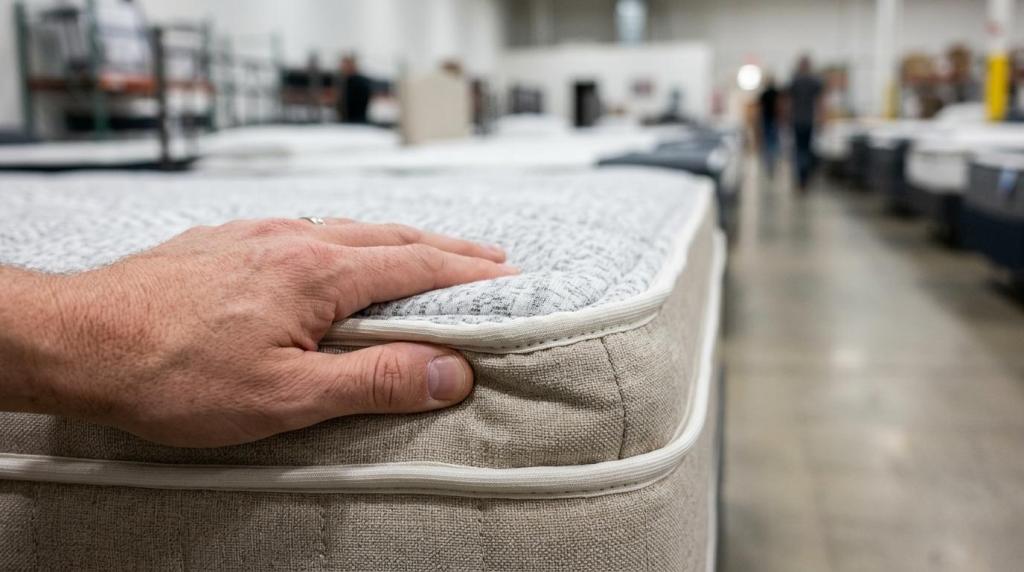
Step two is physical inspection. Look across the full sleep surface for unevenness, torn stitching, broken handles, staining, strong odors, or sidewall damage. That kind of surface check matters for hygiene as well, because DBS Skadedyr notes in its guide to væggelus tegn og gemmesteder that seams, piping, and nearby bed frames are common places to inspect when a mattress has an unclear history. Press on multiple zones, especially the center third and edges. If edge support collapses too easily or one side feels noticeably weaker, the price should not override that signal.
Step three is comfort fit. Spend enough time on the mattress to test pressure relief and support in your normal sleep position. A common mistake is treating a mattress like a commodity. It is not. If your hips drop too far or your shoulders feel jammed after a minute or two, the deal is probably not right for you.
What safety and recall rules matter most for resale furniture?
The most important rules come from the CPSC: recalled products should not be sold, and unsafe infant or toddler items should be avoided even without a recall. Safety beats savings every time.
The Consumer Product Safety Commission says resellers are not required to test products for safety, but they still cannot sell or donate products that do not meet the law. That point matters because shoppers sometimes assume resale equals safety screening. It does not. You still need to look for labels, manufacturer information, and obvious defects.
CPSC guidance is especially strict in practical terms for nursery furniture and durable infant or toddler products. If an item is broken, wobbly, unstable, or missing parts, pass on it. If it has been recalled, it should be destroyed, not resold or given away. That is not a gray area.
This is where liquidation shopping intersects with broader end-of-life questions. EPA’s 2018 data estimated 12.1 million tons of furniture and furnishings entered municipal solid waste, including sofas, tables, chairs, and mattresses. EPA also reported 80.1% was landfilled, while 19.5% went to combustion with energy recovery. Resale can keep usable goods out of the waste stream, but only if those goods are safe and functional. If safety is uncertain, low price is not a valid reason to proceed.
When does furniture liquidation beat traditional retail pricing?
Furniture liquidation beats traditional retail when you value price and immediate availability more than repeatable selection; Charlotte shoppers who browse Tony Discount’s category tend to fit that pattern. Traditional retail wins when you need exact reorders, broad customization, or long planning timelines.
This comparison is not just about sticker price. A lower-ticket liquidation item may still cost more in the long run if it lacks the comfort, durability, or features you need. A standard retailer may offer more color options, matching collections, or factory reorder support. Liquidation may offer stronger value if you are flexible on brand, finish, or collection continuity.
Use a simple if-then test. If you need a sofa for your living room this week and you are open to what is available, liquidation is often the better lane. If you need six identical dining chairs with a replacement path next year, traditional retail may be safer. The key trade-off is flexibility versus certainty.
How can you shop Charlotte liquidation inventory quickly without making a bad decision?
You can move fast and still shop well if you prepare before you browse. A short checklist beats a long debate when inventory is changing quickly.
Start before you leave home. Know your room measurements, preferred style, max budget, and non-negotiables. Decide whether you need performance fabric, sleeper function, power recline, or a specific mattress size. If you do not define those filters first, every discount starts to look tempting.
Then compare each candidate against the same standards. Ask: does it fit, does it function, does it feel solid, and does the total cost still work after pickup or delivery? This protects you from a common liquidation trap, which is buying the cheapest acceptable piece instead of the best-value piece.
Last, give yourself one hard stop. If a product fails on safety, structural condition, or size, walk away even if the price looks outstanding. That discipline is what turns furniture liquidation from a gamble into a smart Charlotte shopping strategy.

